
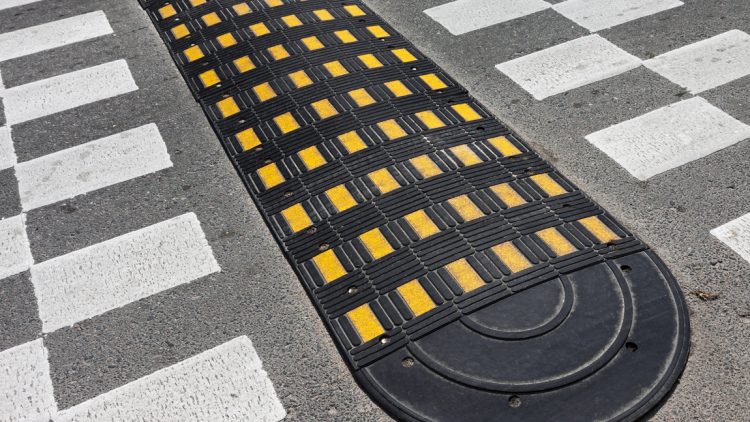
How Much Do Speed Bumps Cost
Written by webtechs

Speed Hump Vs Bump

Let’s take a detailed look at some of the similarities and differences between speed humps and speed bumps!

What Is A Speed Hump?

Sometimes referred to as road humps or undulations, speed humps are most often used for 10-15 mph speed zones. You will most likely find them on local streets or connector roads where traffic must flow smoothly without excessive speed endangering pedestrians. Playground and school zones typically utilize speed humps for traffic management.

Speed humps will create a gentle rocking sensation for vehicles passing over the structures. If the car is driving at an unsafe speed, the hump will jar the vehicle and its contents, causing a noticeable disruption. The humps will span the length of the lane they are placed in.

Speed humps come in various profiles and travel lengths. These factors ultimately influence the discomfort created in a speeding vehicle. Travel length will vary between 3-20 feet, generally. Any travel length longer than the vehicle can create an up-and-down motion instead of the usual rocking sensation. Speed humps are not suitable for arterial roads or emergency routes.

What Is A Speed Bump?

Speed bumps are classified as more aggressive traffic calming options as opposed to speed humps. The bumps are often used in places where pedestrians and cars share close spaces. Speed bumps generally slow traffic to 2-10 mph, which gives vehicles and pedestrians the necessary time to safely react.

Speed bumps are rarely used on public roads because they require a nearly complete stop to cross over them. The height of these bumps can be 2-4 inches total. Since these bumps are much smaller than the vehicles passing over, each axle will cross separately. This means a car moving at an excessive speed will receive two substantial jolts.

Like other more sedate siblings, speed bumps can be placed at intervals in order to maintain speed reduction. Speed bumps are known to deliver a shock and this is why they are referred to by several different names around the world.

Speed Hump Vs Speed Bump Differences

There are a few differences between speed humps and bumps. Let’s take a look at a couple things that set the two structures apart.

Size

Speed bumps are typically higher yet shorter in width when compared to speed humps. This combination will make going over a speed bump a far more jarring experience for the occupants of a vehicle.

Speed Reduction

Speed bumps will reduce vehicle speeds by an average of 5-10 mph. Most cities will not allow speed bump installation on public streets. Speed humps, meanwhile, can reduce speeds by 15-20 mph. Humps are usually found on residential roads and in school zones.

Benefits

Deciding between installing a speed bump or hump is important. The price of a bump or hump will depend on the design and condition of your community.

Although speed bumps can be costly, they do offer great valuable and durability to neighborhoods. Let’s take a look at a few benefits of speed bump installations.

Great Return on Investment

Typically, speed bumps do offer excellent value for communities looking to slow traffic speeds nearby. Furthermore, repairing these bumps over the years will not cost a lot of money.

Customization

The speed bumps size and design must be suited to the conditions of specific roads in order to get the best results possible. While rubber and metal speed bumps come in a variety of shapes and sizes, they are not as durable as asphalt.

Accident Reduction

By requiring drivers to slow down while driving, these speed bumps can ultimately reduce road mishaps. More importantly, they are quite efficient at reducing accidents involving pedestrians. Speed bumps are a great solution for traffic control on a daily basis.

Black & Gray Asphalt Co. In Phoenix, Arizona

Doing business in the Valley since 1981 with one owner, Black & Gray Asphalt Co. has built an unmatched reputation for reliability, service, and quality workmanship. Our customers will tell you they come to Black & Gray Asphalt Co. because, no matter what the project’s size or complexity, we can do the job from start to finish.

We offer complete Residential & Commercial Concrete and Asphalt Maintenance Programs. Contact us today for all your sealcoating, stripping, signage, paving, asphalt patching, speed bump, speed hump, and concrete needs today!
Asphalt Parking Lot Cost
Written by webtechs

Asphalt Parking Lot Cost

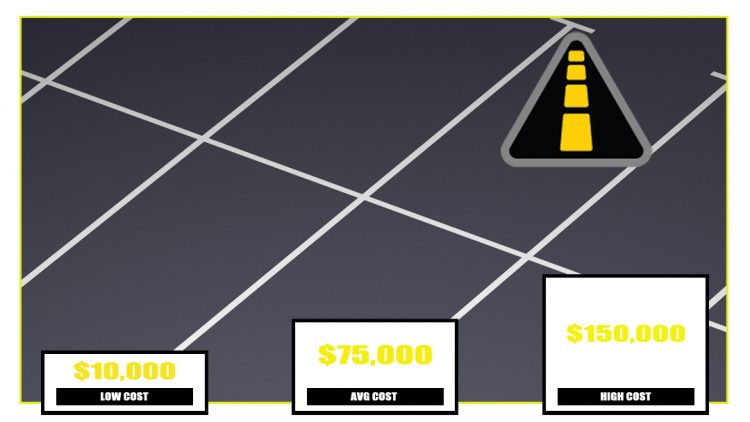
New asphalt parking lots cost an average of $75,000. Prices can range all the way from $10,000-$150,000, typically. Some larger projects can cost up to $700,000 total.

Asphalt Vs Concrete Parking Lot Cost

Customers can expect to pay between $2.50-$4.50 for asphalt or $4-$7 for concrete, according to HomeAdvisor. Neither material type takes more time to install, but the main reason why concrete costs more is because it lasts longer.

When well maintained, concrete parking lots will last between 30-40 years. Asphalt, meanwhile, will last between 20-30 years.

Here are the average asphalt parking lot installation costs:

  • Lowest Cost: $10,000.
  • Average Cost: $75,000.
  • Highest Cost: $700,000.

Asphalt Parking Lost Cost Per Square Foot

Square footage is the most common pricing method for asphalt parking lots. You can expect to pay between $1-$2.50 per square foot for asphalt. Prices, of course, will vary based on location.

Tar And Chip

A newer tar and chip parking lot will cost anywhere from $1-$3 per square foot. This method utilizes gravel, asphalt, and chipped stones. It is a good solution for parking lots located near the bottom of hills, as the installation process will help prevent future cracks.

Parking Lots Cost Per Size

 $405-$1,134 is a good cost estimate for each parking space. A standard parking space is 9 feet wide by 18 feet in length. This comes out to roughly 162 square feet. Make sure to consider that the additional space is slightly more than half of the lot’s total size.
Here are some estimates based on square footage and the number of parking spots:
  • 6 spots (2,000 sq. ft.): $5,000-$14,000.
  • 10 spots (4,000 sq. ft.): $10,000-$28,000.
  • 30 spots (10,000 sq. ft.): $25,000-$70,000.
  • 100 spots (35,000 sq. ft.): $87,000-$245,000.
  • 200 spots (70,000 sq. ft.): $175,000-$490,000.
  • 300 spots (100,000 sq. ft.): $250,000-$700,000.

 Asphalt Parking Lot Add-On Costs

 Additional features can add to your total costs. Some items, such as lighting, may be a necessity for any commercial parking lot installation.
  • Paving: $2.50-$7 per sq. ft.
  • Lot Stripping: $4-$5 per 18-foot line.
  • Sealcoating: $0.14-$0.25 per sq. ft.
  • Lighting Installation: $900-$1,200 per light.
  • Solar Canopy/Panels: $16,580-$30,700.
  • Parking Lot Sensors: $200-$600 per spot sensor.
  • Parking Lot Bumpers: $50-$150 per bumper.

*Contact the team at Black & Gray Construction for more pricing information.

Black & Gray Asphalt Co. In Phoenix, Arizona

Doing business in the Valley since 1981 with one owner, Black & Gray Asphalt Co. has built an unmatched reputation for reliability, service, and quality workmanship. Our customers will tell you they come to Black & Gray Asphalt Co. because, no matter what the project’s size or complexity, we can do the job from start to finish. We offer complete Residential & Commercial Concrete and Asphalt Maintenance Programs. Contact us today for all your sealcoating, stripping, signage, paving, asphalt patching, speed bump, speed hump, and concrete needs today!
Speed Bumps Cost
Written by webtechs

How Much Do Speed Bumps Cost?

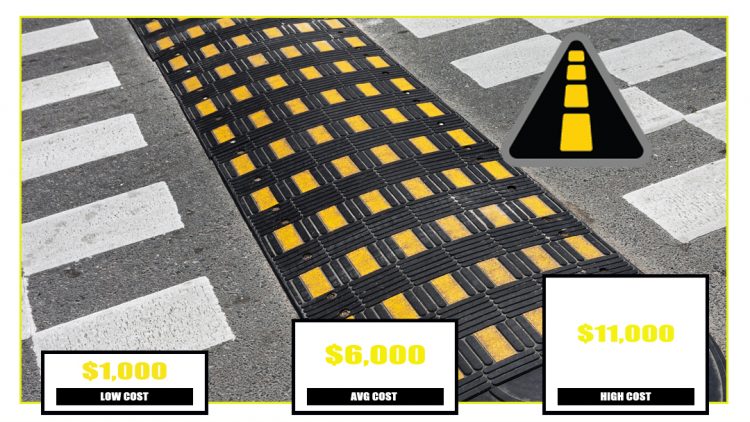
Speed bump costs can range anywhere from $1,000-$11,000 depending on the type of bump and your location. Installing a four-segment bump covers the track width of a standard vehicle with a total cost of $300. A six-segment bump, of course, will cost much more.

*These are cost estimates according to Unimat-Traffic. Contact the team at Black & Gray Asphalt Construction for more information. 

Average Cost Of Speed Bump Installation

Depending on the specific type of speed bump you wish to install, you can expect to pay up to $5,800. Keep in mind you may have to spend another $1,000 to cover both permits and thermal stripping.

Paying for additional signs and RPMs will also add to your overall cost of installation. These speed bumps can undoubtedly improve the look of your community and provide some much-needed safety. You can expect the installation process to take about two days.

Once the process has been completed, the project can cost anywhere from $5,000-$15,000. While a bump can cost $500-$2,500 per unit, a traffic circle will be much more costly, averaging around $25,000 for installation.

Depending on your municipality, a speed bump or traffic circle will cost an average of $20,000. Here is what you can expect to pay once the installation of a speed bump has been completed:

  • Lowest Cost: $5,000.
  • Average Cost: $10,000.
  • Highest Cost: $15,000.

Speed Bump Installation Cost

Why Install Speed Bumps?

Deciding between installing a speed bump or hump is important. The price of a bump or hump will depend on the design and condition of your community.

Although speed bumps can be costly, they do offer great valuable and durability to neighborhoods. Let’s take a look at a few benefits of speed bump installations.

Great Return on Investment

Typically, speed bumps do offer excellent value for communities looking to slow traffic speeds nearby. Furthermore, repairing these bumps over the years will not cost a lot of money.

Customization

The speed bumps size and design must be suited to the conditions of specific roads in order to get the best results possible. While rubber and metal speed bumps come in a variety of shapes and sizes, they are not as durable as asphalt.

Accident Reduction

By requiring drivers to slow down while driving, these speed bumps can ultimately reduce road mishaps. More importantly, they are quite efficient at reducing accidents involving pedestrians. Speed bumps are a great solution for traffic control on a daily basis.

Black & Gray Asphalt Co. In Phoenix, Arizona

Doing business in the Valley since 1981 with one owner, Black & Gray Asphalt Co. has built an unmatched reputation for reliability, service, and quality workmanship. Our customers will tell you they come to Black & Gray Asphalt Co. because, no matter what the project’s size or complexity, we can do the job from start to finish. We offer complete Residential & Commercial Concrete and Asphalt Maintenance Programs. Contact us today for all your sealcoating, stripping, signage, paving, asphalt patching, speed bump, speed hump, and concrete needs today!
Cracks In The Sidewalk
Written by webtechs

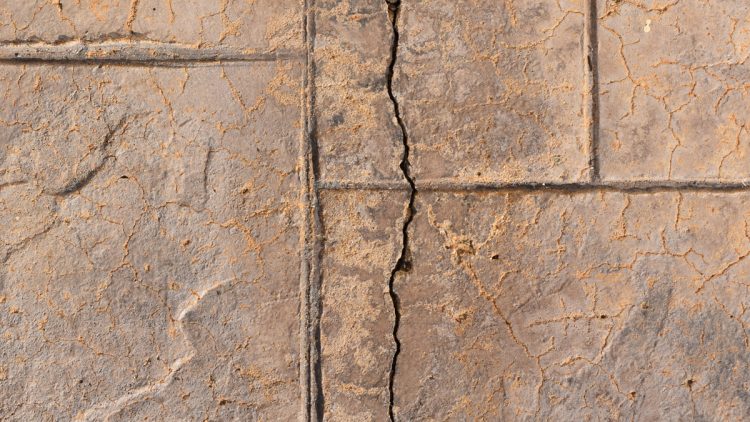
Cracks In The Sidewalk: Reasons Why & How To Repair Damage

Sidewalks crumbling and cracking can happen for a variety of reasons. Let’s take a look at why your sidewalk may be cracked and what you can do to repair the damage.

Reasons Why The Sidewalk Is Cracked

Concrete is a very versatile construction material that is great at withstanding a tremendous amount of weight. That is why this material is commonly used for sidewalks, driveways, and other foundations.

However, concrete also features a low tensile strength, which is an alternative way of saying it is brittle. Concrete’s brittleness will pop up when weight is put on it and there is nothing to support it underneath. Oftentimes, this causes the concrete to become uneven and sink.

The Soil Beneath The Slab Is Too Dry

During drought-like conditions, the soil under the slab may dry out and shrink. The shrinking will create spaces or voids that reduce the concrete’s support, overall. The concrete above will eventually crack and sink. The gaps then lead to cracks or crumbling of the sidewalk. If the issue persists, you may have to repair a large area of concrete.

The Soil Beneath The Slab Is Not Compacted

This may be the most common reason for sidewalk cracks. Poor soil conditions routinely result in cracks and crumbling of the concrete. Specific types of fill soil, such as clay, will absorb more water than other types of dirt. If the fill soil underneath the concrete is not compacted correctly, it may absorb water and swell at different rates.

This can result in a shifting of the concrete slabs. Settlement cracks occur when the soil below the concrete moves. Plus, when the cracks enlarge, they can lead to other issues.

The Soil Beneath The Slab Is Wet

Following periods of dryness, the rain will eventually return. When the rain comes back, the water then has an easier pathway under the slab due to cracks and crevices left behind during the dry times. The soil under the slab will wash away or ultimately become too soft and wet to support the above concrete.

Water can also swell clay-rich soil and the resulting expansion can cause a sidewalk to stress the concrete in different ways. If you have ever stubbed a toe on an uneven slab, this is a result of the soil beneath being far too wet.

How To Repair Cracks In The Sidewalk

Sometimes, fixing cracks in the sidewalk is not a DIY project. The team at Black & Gray Asphalt Co. in Phoenix, Arizona, is equipped to handle all kinds of sidewalk repairs. Black & Gray Asphalt Co. offers complete residential & commercial concrete and asphalt maintenance programs. Contact us today!

Asphalt & Concrete Maintenance In Phoenix, AZ By Black & Gray Asphalt Co.

Doing business in the Valley since 1981 with one owner, Black & Gray Asphalt Co. has built and unmatched reputation for reliability, service, and quality workmanship. Our customers will tell you they come to Black & Gray Asphalt Co. because, no matter what the project’s size or complexity, we can do the job from start to finish. It’s the customers that are responsible for our success. We never forget that our continued success depends on satisfied customers. Contact us today!